TopicsReal storiesOur storyFrom the groundContactGet in touch
HEALTH · CHILD-SPACING ADVOCACYGarissa County

A family-planning advocacy journey.

How a county with a 5.5% modern contraceptive prevalence rate used culturally and religiously sensitive advocacy — engaging men, religious leaders and county government — to report 11% in child-spacing service uptake by 2022.

1/2
Scroll

This is the story of a missed opportunity in a health system — and of the advocacy that answered it. In Garissa County, very low contraception use met high fertility, yet women were already coming to facilities for antenatal care and childbirth. Fountain of Hope and its partners recognised these visits as chances to offer postpartum family planning, and built a culture- and faith-sensitive advocacy effort around the practice of child spacing. The figures on this page are drawn from the programme material and are shown exactly as they appear there.

How it all began

A 5.5% rate, and the missed opportunity behind it.

The Kenya Demographic and Health Survey (KDHS) of 2014 showed Garissa County with the third lowest contraceptive use in Kenya — a modern contraceptive prevalence rate (mCPR) of 5.5% against high fertility. Yet around the same women, the health system was already active.
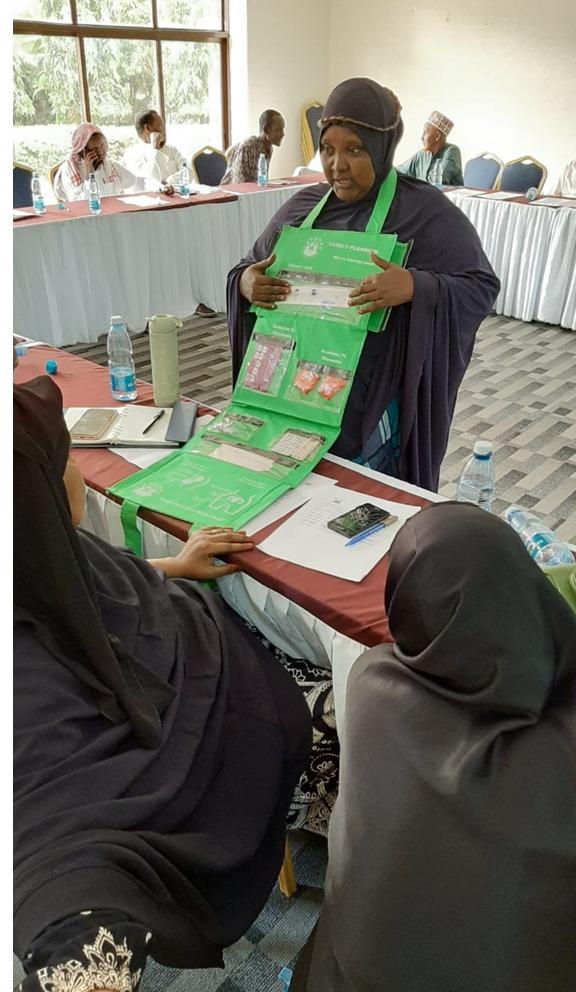
Family-planning advocacy material used in the Garissa child-spacing story
The Garissa programme material

Women were already present. Postpartum family planning was not.

Most women attended antenatal care — 87.3% made a first visit — and many made a fourth: 47.7%. They arrived at facilities to give birth. But without postpartum family planning (PPFP) data systems or indicators, without direction from health leadership and with providers hardly counselling women at ANC, the moment after birth became a missed opportunity: women left with no avenue to space their next pregnancy.

Family planning had to be reframed in terms the community would hear — and those closest were women who had just given birth. This project exists because of that gap.
5.5%Modern contraceptive prevalence rate, KDHS 2014 — third lowest contraceptive use in Kenya.
94.5%Of married women in Garissa were not using a modern contraceptive method at the time of the survey.
2.4% · 1.5%Uptake of injectables and implants respectively — a narrow method mix among the methods in use.
≈ 25 kmThe average distance to a health facility, making return visits a real cost for mothers.
What stood in the way

Barriers named in the source material.

01

No postpartum FP data systems or indicators

There was little evidence that women were being counselled or served after birth — the scale of the missed opportunity was invisible.

02

No direction from health leadership

Without top-level guidance, facilities had no mandate to offer postpartum family planning.

03

Inadequate provider knowledge and skills

Health workers had too little training to counsel women — women were hardly counselled at antenatal care.

04

Cultural and religious misconceptions and myths

Family planning is culturally and religiously sensitive in a county that is about 98% Muslim and highly patriarchal.

05

Long distances to facilities

Facilities average about 25 kilometres away, so returning for a service was a real cost for mothers.

06

Early marriage

Early marriage disempowers young women, often as they enter their childbearing years.

07

Limited male support

Reproductive decisions are rarely a woman's alone, and men had largely been left out of the conversation.

Why advocacy for child spacing

A sensitive subject, spoken in the community's own terms.

“Family planning” was culturally and religiously sensitive in Garissa. So the advocacy adopted a phrase communities could hold — child spacing — and built its health message around it.

The sensitive term

Family planning

Accurate in clinical terms, but heavy with cultural and religious overtones in a county that is around 98% Muslim and highly patriarchal. Used alone, it can close the conversation before it starts.

The advocacy language

Child spacing

Describes allowing a period of rest between births — an ideal of about two to three years — in a way communities can relate to a mother's health, breastfeeding and caring for the children already at home.

01

The mother needs time to recover — her health, nutrition and energy — before another pregnancy.

02

Exclusive breastfeeding is recommended for about six months, and mothers need time to breastfeed.

03

The next pregnancy should wait until the last child is at least two years old; the ideal space between births is two to three years.

04

Closely spaced births are linked to higher maternal and child morbidity and mortality — and women of childbearing age in Garissa often have six to ten closely spaced children.

The Garissa County context

Where Garissa stood, beside the national picture.

These indicators framed the challenge the advocacy set out to address — a county whose maternal and child-health gap sits in an area that is predominantly Muslim, highly patriarchal and far from facilities.

Garissa reproductive-health indicators — KDHS 2014, as printed in the programme material (Kenya = national; Garissa = Garissa County). Bars approximate the ratio between the two.
IndicatorKenyaGarissa
Total fertility ratebirths per woman3.9Kenya6.1Garissa
Contraceptive prevalence ratethird lowest county-wide use in Kenya58%Kenya5.5%Garissa
Antenatal care — 1st visitof women95.5%Kenya87.3%Garissa
Antenatal care — 4th visitof women57.7%Kenya47.7%Garissa
Skilled deliveriesof deliveries61.8%Kenya39.8%Garissa
Postnatal careGarissa figure recorded via DHIS, not KDHS51%Kenya39%Garissa
Infant mortalitylive births39 / 1000Kenya37 / 1000Garissa
Under-five mortalitylive births51 / 1000Kenya44 / 1000Garissa
Fully immunized childrenof children68%Kenya54.4%Garissa
Female genital mutilationof women21%Kenya97%Garissa
Maternal mortality ratiolive births; Garissa figure also cites the Kenya Population Situation Analysis Report, 2013362 / 100,000Kenya646 / 100,000Garissa

Source note: the Garissa maternal mortality ratio additionally references the Kenya Population Situation Analysis Report, 2013; the Garissa postnatal-care figure of 39% is recorded through DHIS rather than KDHS. The programme's own narrative records skilled birth attendance at 36.7%, while the KDHS table lists skilled deliveries at 39.8% — both figures appear in the source and are shown here as printed, without reconciliation.

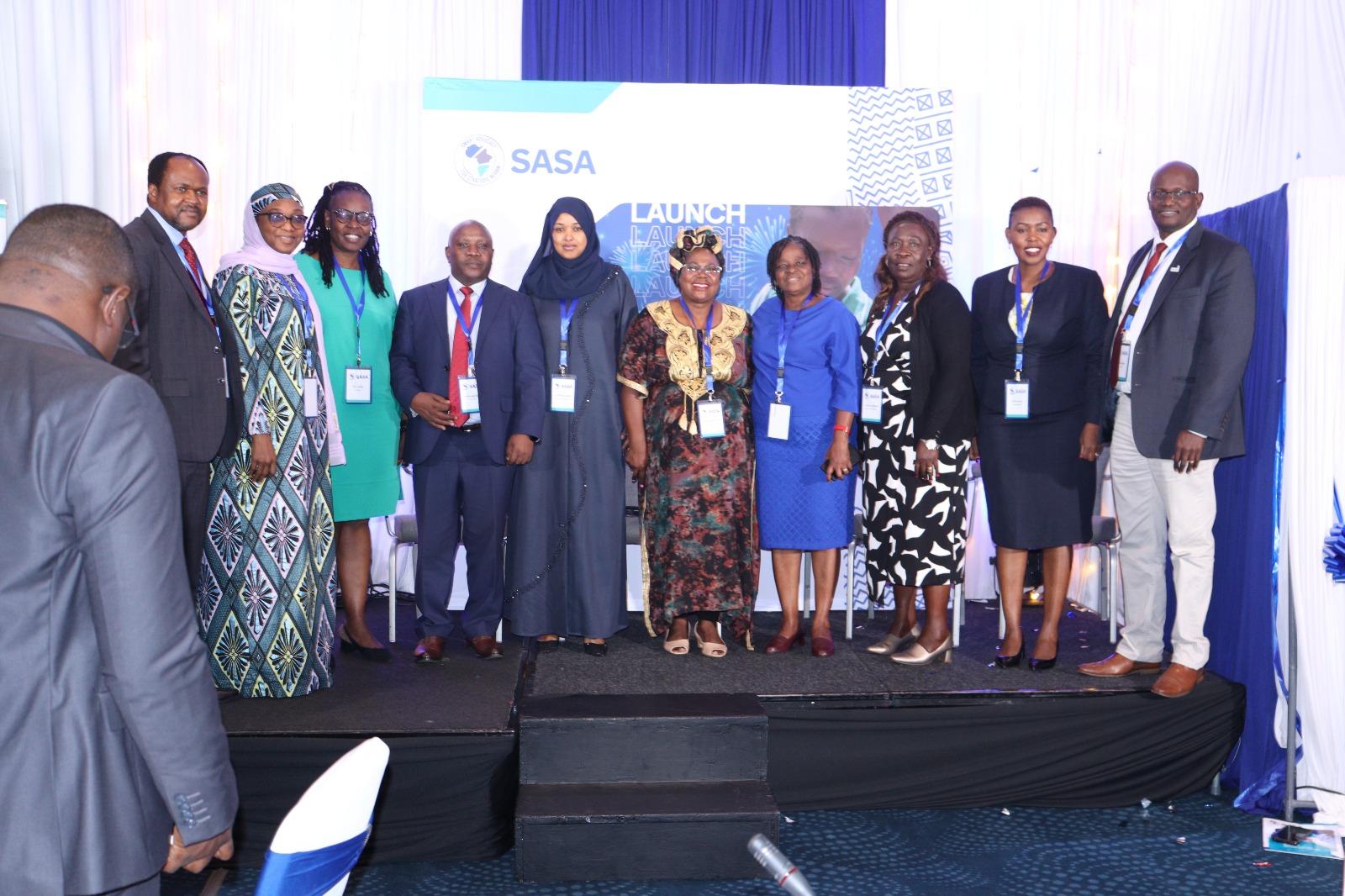
Grassroots women champions gathering to advocate for maternal and newborn health
The gendered lens of the journey
Why gender-lensed advocacy

Child spacing is not a women's issue alone. Men shape the decision too.

Nationally, 47.4% of male partners surveyed in KDHS 2014 did not know about contraception. In Garissa's patriarchal context, responsibility for childbirth is placed on women, male involvement in reproductive health is “very minimal”, and men often see involvement as culturally inappropriate. Men also seek health care rarely.

The system itself discouraged them: facilities are named “Mother and Child”, maternity sections and signage do not welcome men, and provider behaviour reinforces it. The advocacy concluded that service delivery had to be rethought — and that male involvement had to become part of the child-spacing advocacy effort.

The advocacy journey

From a survey finding to county-wide action.

2014
The evidence

KDHS 2014 records Garissa's modern contraceptive prevalence rate at just 5.5% — among the lowest in Kenya.

2016
The project

The Child Spacing Advocacy Efforts Project I is commissioned through FP2020's Rapid Response Mechanism (RRM), funded by the United Nations Foundation.

2017
A county plan

Garissa County develops its Family Planning Implementation Plan with the support of Fountain of Hope and the UN Foundation.

2017–2018
A champion

Fardosa Osman, founder of Fountain of Hope and then Garissa County First Lady as spouse to the Governor, acts as the family-planning champion.

2018–2019
Government acts

The County Director of Health issues a circular directing Medical Superintendents and Facility In-Charges to provide and report postpartum family-planning services.

Through 2020–2022
Services and reporting

Hospitals and maternity shelters begin providing postpartum family-planning services and counselling — and the county tracks uptake across its seven sub-counties.

The advocacy strategy

A deliberate process to influence the system.

Advocacy was a strategic series of actions to influence the holders of governmental, political, economic and private power — a deliberate, calculated process that articulates issues in order to inspire, motivate and influence policies and practices. It brought together the County Departments of Health and Gender with like-minded organizations, led by the project's community champions.

01

A county directive

The County Director of Health issues a circular directing Medical Superintendents and Facility In-Charges to provide — and report — post-pregnancy and postpartum family planning.

02

Facilities begin

Hospitals and maternity shelters begin providing postpartum family-planning services and counselling to women who need them.

The advocacy efforts

Five streams of advocacy, together.

Each effort reinforced the others — informing leaders, widening the audience, and embedding the message in faith and government.

A

Sensitizing decision makers through lived experiences

Public forums gave survivors of gender-based violence safe spaces to speak — women and youth voiced concerns and, above all, being listened to mattered. The experience translated into greater support from leaders.

B

Social and traditional media campaigns

The approach was built on audience analysis: youthful, urban audiences were reached online, while conservative rural audiences were reached through radio. Iftin FM and community radio carried prime-hour talk shows on child spacing and SGBV, featuring religious leaders and the County RH Coordinator in the local language.

C

Public pronouncements and releases by renowned personalities

Statements by well-known figures spoke of the acceptability, importance and urgency of child spacing — widening support beyond the project's own forums.

D

Reducing the perception that Islam is against child spacing

Rather than contesting the community's faith, the project put religious leaders at the centre of message development. Sheikh Ali Abdi became a child-spacing champion, and the conversation drew on Quranic framing — including the two years of breastfeeding — to show that child spacing is not discouraged by faith.

E

Partnerships with county government

The strides rest on partnerships with the Departments of Health and Gender. Together with like-minded organizations, these partners increased the uptake of child-spacing services, raised awareness of SGBV, and engaged sheikhs, youth, women leaders, political leaders, MCAs and health-care workers.

Guiding principles

The lens the journey was read through.

Meaningful, inclusive participation — especially men.

Every family decision is shaped by women and men together. The advocacy is built on a gendered lens and a firm belief that all voices belong in the journey.

Engage women, men, youth, stakeholders, community leaders and decision makers.

No one is left outside the conversation — from households to health facilities to the county leadership.

Dialogue and investment in people.

The work invests in people, works around people's interests and puts its messages in the community's own context and language.

The results

Three advocacy outcomes.

The achievements chapter of the programme material summarises the advocacy journey in three outcomes.

Increased male involvement in family planning.

Increased support for child spacing among postpartum married Muslim women.

Increased reporting and handling of gender-based violence cases.

Around these outcomes the journey also raised awareness of the importance of child spacing, drew religious leaders — including a child-spacing champion — into the message, gave postpartum family-planning services real attention in facilities, and created space for the sensitive work on gender-based violence.

On SGBV, the community-led offensive against gender-based violence saw cases in Balambala Sub-County and across the county “considerably go down”. Challenges remained: some offenders were relatives or implicated gatekeepers, survivors remained reluctant to report, case resolution was poor, and there was no psychosocial support and little access to justice.

The war was far from being won. SGBV cases continued; unmet need for family planning remained high; maternal and child mortality continued to cause concern; and uptake of family-planning commodities and services remained a concern. Fountain of Hope remains committed to the journey.
Reported progress · 5.5% to 11%
5.5%
5.5%
KDHS 2014Garissa modern contraceptive prevalence rate (mCPR)
2022Reported child-spacing service uptake

The two figures describe different measurements. The 5.5% is the county's modern contraceptive prevalence rate in KDHS 2014. The 11% is the child-spacing service uptake reported in 2022 — with the achievements chapter also citing a 5% figure from the 2018/19 KHDS. They are not a single, continuous trend, and are presented here exactly as they appear in the source material.

The service data

Postpartum family planning, sub-county by sub-county.

Among the programme's records is a table on  “Data on Post Partum Family Planning Method Uptake — Garissa County”. It counts two measures, year by year, across the county's seven sub-counties.

Postpartum FP method uptake — Garissa County, 2020Figures as printed in the programme material — postpartum FP at 4 weeks to 6 weeks, and postpartum FP within 48 hours.
Sub-countyPostpartum FP · 4 weeks to 6 weeksPostpartum FP · within 48 hours
Balambala1011
Dadaab2328
Fafi3035
Garissa111124
Hulugho1215
Ijara2229
Lagdera3844
Garissa County246286
Total246286
Postpartum FP method uptake — Garissa County, 2021Figures as printed in the programme material.
Sub-countyPostpartum FP · 4 weeks to 6 weeksPostpartum FP · within 48 hours
Balambala1754
Dadaab8027
Fafi8514
Garissa20184
Hulugho1113
Ijara77392
Lagdera3624
Garissa County496595
Total496595
Postpartum FP method uptake — Garissa County, 2022Figures as printed in the programme material.
Sub-countyPostpartum FP · 4 weeks to 6 weeksPostpartum FP · within 48 hours
Balambala817
Dadaab4853
Fafi6219
Garissa8876
Hulugho68
Ijara61250
Lagdera2624
Garissa County299447
Total299447

County totals are reproduced as printed in the source table without recalculation.

Grassroots women health champions engaging with a health partner
The journey within a wider commitment
Achievements at country level

Aligned with a national commitment to Northern Kenya.

The project operated in alignment with the FP2020 Kenya Country Action Plan, in which Kenya committed to broadening access to and choice of family planning — with a special focus on the Arid and Semi-Arid Lands (ASAL), including Northern Kenya, where Garissa lies.

Within that commitment, two programmatic actions anchored the work: building the capacity of facility providers to deliver postpartum family planning, and increasing demand for — and access to — family-planning services. The advocacy journey on this page sits inside that wider national story.

Heightened awareness of the importance of child spacing across Garissa County.

County leadership acting on postpartum family planning through policy direction.

A stronger culture of reporting postpartum family-planning services.

Facilities providing postpartum family-planning services and counselling.

Sensitization targeting men to increase their involvement in family planning.

Engagement of religious leaders — with a child-spacing champion among them — in the message of child spacing.

Participation of youth, women, religious and political leaders, MCAs and health-care workers.

Child-spacing service uptake increasing from 5% (2018/19 KHDS) to a reported 11% in 2022.

What the journey shows

Systems move when the community speaks to them.

A low contraceptive prevalence rate was not the end of the story — it became the start of one. The journey shows that advocacy works when it is culturally and religiously respectful, when men and women are engaged together, when faith leaders are partners rather than obstacles, and when community voices reach government.

From a county circular to a maternity-shelter counselling room, from Iftin FM to a Quranic framing of breastfeeding, a community and its county government built a shared language for child spacing. The reported 11% is a marker of that journey — and the war is far from won.

The figures on this page are the programme's figures. The work continues.

In the record

What the record shows.

Documented interventions that sit at the heart of the child-spacing and gender-lensed advocacy journey on this page.

RMNCAH-NGarissa County

Advocacy for child spacing among postpartum married Muslim women

Date
Sept. 2019 – June 2020
Reach / Impact
423 women accessed PPPF services. The record also documents PPPF circular direction to medical superintendents and facility in-charges to provide PPPF services and records, with a 25% increase in male involvement in PPPF.
RMNCAH-N, GenderGarissa Township and Balambala Sub counties — Garissa County

Gender-lensed Advocacy in RMNCAH-N

Date
April–July 2022
Reach / Impact
30 opinion and faith leaders trained on male involvement in FP. 30 key opinion and faith leaders, duty bearers sensitized on SGBV cases prevention, reporting and care. 130 community members in Hadley Village sensitized on SGBV cases prevention, reporting and care.

Documented in Fountain of Hope's portfolio of interventions.

Support the work

Stand with the women who lead this change.

The story of Garissa's child-spacing journey is Fountain of Hope's founding work — join the women, men and religious leaders who continue it.